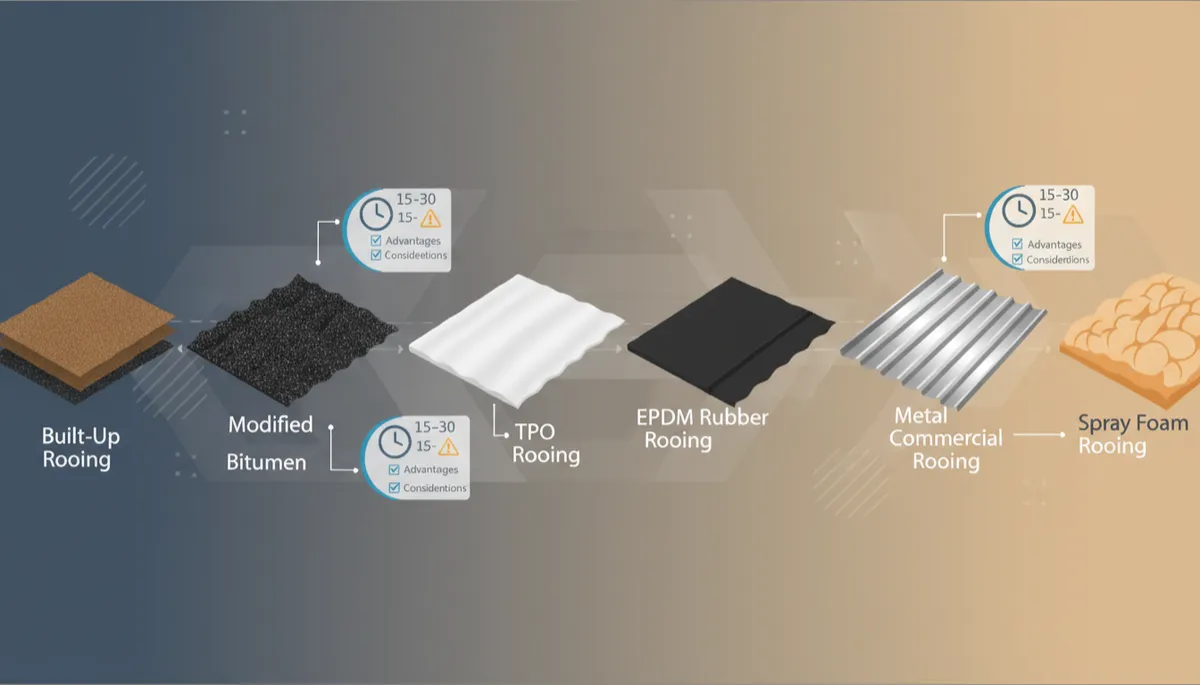
Commercial Roof Lifespan by Material Type
Commercial Roofing, Roofing Material Types, Commercial Roofing Lifespan
How Long Should a Commercial Roof Last? (By Material Type)
For most businesses, the roof is out of sight and out of mind—until something goes wrong. Yet your choice of roofing material can influence maintenance costs, risk exposure, and even insurance premiums for decades. Understanding the expected commercial roofing lifespan by material type helps property managers, building owners, and agencies plan budgets and make smarter capital decisions.
What Determines Commercial Roofing Lifespan?
While each system has its own strengths, several universal factors influence how long a commercial roof will last:
Material type and quality – The composition, thickness, and manufacturer standards directly affect durability and aging.
Climate and exposure – UV radiation, temperature swings, wind, hail, and ponding water all accelerate wear in different ways.
Installation quality – Even the best material fails early if seams, flashing, and transitions are poorly detailed or rushed.
Maintenance practices – Regular inspections, cleaning drains, and prompt repairs can add 5–10 years to many systems’ service life.
With those variables in mind, the ranges below assume proper design, professional installation, and routine maintenance. Actual performance may be shorter—or longer—depending on how your roof is managed.
Built Up Roofing (BUR)
Built Up Roofing is one of the oldest and most proven systems for low-slope commercial roofs. Often called “tar and gravel,” BUR consists of multiple plies of roofing felt embedded in bitumen (asphalt or coal tar), topped with a protective surface such as gravel or a mineral cap sheet.
Average Lifespan of Built Up Roofing
A well-designed and maintained BUR system typically lasts 20–30 years. In moderate climates with excellent maintenance, some built up roofs have been known to perform beyond 30 years, especially those with heavier surfacing and multiple plies.
Advantages of Built Up Roofing
Proven track record: More than a century of use across commercial buildings, schools, and government facilities demonstrates its reliability.
Excellent waterproofing: Multiple layers provide redundancy; if one ply is compromised, others still protect the deck.
Good resistance to foot traffic: The gravel or cap sheet surface helps protect the underlying membrane from mechanical damage, useful on roofs with regular service access.
Key Considerations for Built Up Roofing
Installation involves hot asphalt or coal tar, which can be disruptive and may require more stringent safety and odor-control measures—important for occupied buildings like hospitals or offices.
BUR is relatively heavy; structural capacity must be confirmed, especially for retrofits or older buildings.
Leak detection can be more challenging under gravel surfacing, so partnering with an experienced commercial roofer is critical for diagnostics and repairs.
Modified Bitumen Roofing
Modified bitumen roofing evolved from BUR systems, using asphalt modified with polymers (such as SBS or APP) to improve flexibility and weather resistance. It is usually installed in rolls and can be applied with heat, cold adhesives, or self-adhered sheets, making it a versatile choice for many commercial properties.
Average Lifespan of Modified Bitumen Roofing
Typical service life for modified bitumen roofs ranges from 20–30 years, similar to BUR. Multi-ply assemblies and light-colored cap sheets can extend the effective lifespan by improving redundancy and reducing heat-related aging.
Advantages of Modified Bitumen Roofing
Enhanced flexibility compared to traditional asphalt, which helps resist cracking in cold climates or on roofs that experience movement and vibration.
Multiple installation methods (torch-applied, cold-applied, self-adhered) allow contractors to match the system to site constraints, safety requirements, and budget.
Strong puncture resistance and good performance under foot traffic, especially in multi-ply configurations.
Key Considerations for Modified Bitumen Roofing
Torch-applied systems require strict fire safety measures and trained crews; many facilities prefer cold-applied or self-adhered options to reduce risk and disruption.
Dark-colored cap sheets can contribute to heat gain; specifying reflective, light-colored surfaces can improve energy performance but may slightly change maintenance needs.
As with BUR, weight and layer thickness must be coordinated with structural engineering, particularly on older decks.
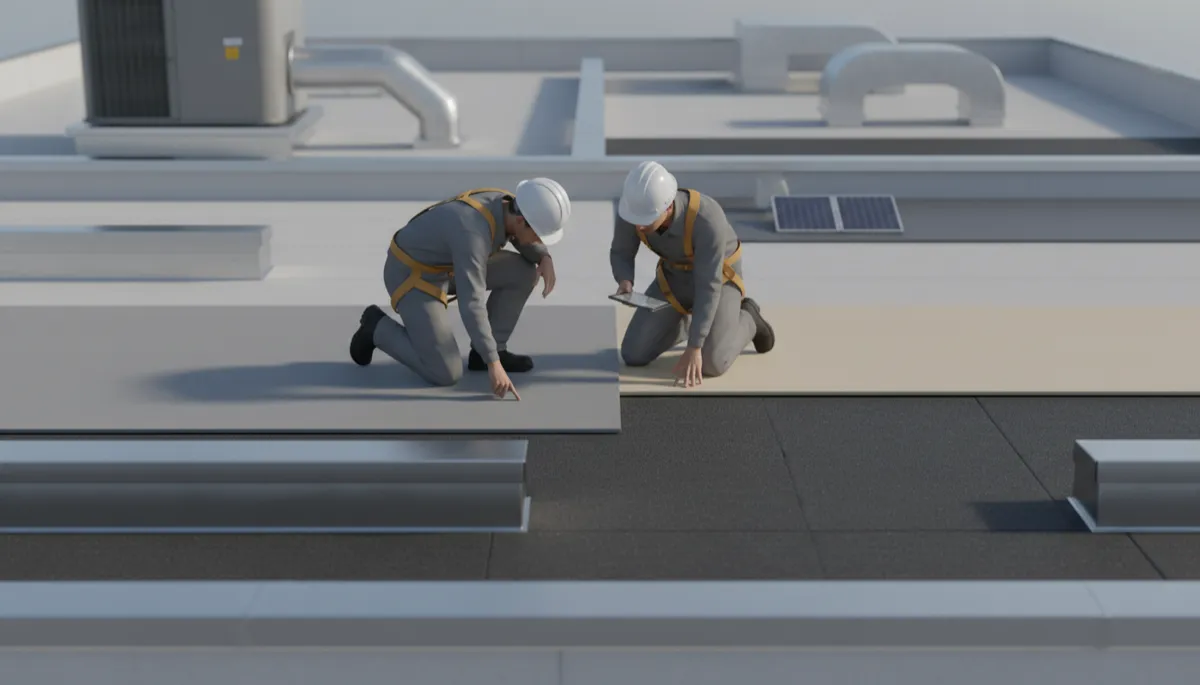
Routine inspections and targeted repairs can add years to any commercial roofing system.
TPO Roofing (Thermoplastic Polyolefin)
TPO roofing has become one of the most popular single-ply systems for modern commercial buildings, especially for owners focused on energy efficiency and sustainability. TPO membranes are typically white or light-colored, reflecting sunlight and reducing cooling loads on air-conditioned facilities.
Average Lifespan of TPO Roofing
A well-installed TPO system generally delivers a 20–30 year commercial roofing lifespan. Thicker membranes (60 mil or 80 mil versus 45 mil) and robust detailing at seams and penetrations can extend performance, particularly in harsh climates with intense UV exposure.
TPO Roofing Advantages for Commercial Buildings
Energy efficiency: Highly reflective surfaces lower rooftop temperatures, which can reduce cooling costs and improve HVAC performance, especially on large, air-conditioned warehouses and offices.
Heat-welded seams: TPO seams are typically hot-air welded, creating strong, monolithic joints that are often stronger than the membrane itself when installed correctly.
Lightweight construction puts less stress on the building structure, which is beneficial for retrofits or facilities with limited load capacity.
Key Considerations for TPO Roofing
Performance is highly dependent on membrane formulation and manufacturer quality; work with established brands and certified installers for long-term reliability.
In very hot, high-UV regions, some early-generation TPO products aged faster; modern formulations have improved, but climate-appropriate specifications remain important.
TPO can be more rigid in cold temperatures than some alternatives, so detailing around corners and penetrations must be carefully executed to avoid stress and cracking over time.
EPDM Rubber Roofing
EPDM rubber roofing is a synthetic rubber membrane widely used on commercial and industrial buildings. Typically black (though white options exist), EPDM is valued for its flexibility, weather resistance, and long service life, especially in climates with significant temperature swings.
EPDM Rubber Lifespan on Commercial Buildings
One of the biggest selling points of EPDM is its longevity. With proper installation and maintenance, EPDM roofs often last 25–35 years, and some high-quality systems have reached or exceeded 40 years in service. This makes EPDM one of the longer-lived single-ply options on the market.
Advantages of EPDM Rubber Roofing
Exceptional flexibility: EPDM remains pliable in cold temperatures, accommodating building movement and reducing stress at corners and penetrations, which contributes to its long EPDM rubber lifespan.
Large sheet sizes mean fewer seams on big roofs, reducing potential leak points compared to systems that rely on many rolls and joints.
Proven track record over several decades in diverse climates, from cold northern regions to temperate and moderate environments.
Key Considerations for EPDM Roofing
Standard black EPDM absorbs heat, which can increase cooling loads in hot climates; white EPDM or additional coatings may be preferable where energy performance is a priority.
Seams are typically adhered or taped rather than heat-welded, so installation quality and manufacturer-approved accessories are critical to long-term watertightness.
EPDM can be more susceptible to punctures from sharp objects; rooftop traffic should be controlled and walk pads added where regular access is required.
Metal Commercial Roofing
Metal commercial roofing includes standing seam panels, corrugated systems, and architectural metal roofs made from steel, aluminum, or other alloys. While often associated with sloped roofs, metal is also used on low-slope applications with appropriate detailing. Its reputation centers on metal roofing durability and long-term performance.
Average Lifespan of Metal Commercial Roofing
Properly designed and maintained metal roofs often provide 30–50 years of service, and some high-end systems last even longer. Protective coatings, quality fasteners, and correct clip design are crucial contributors to this extended commercial roofing lifespan.
Metal Roofing Durability: Key Advantages
Outstanding resistance to wind, hail, and fire, making metal an attractive option for facilities in storm-prone or wildfire-affected regions and for owners focused on risk mitigation.
Long-term structural stability; many metal systems can be re-coated or restored rather than replaced, extending service life and improving life-cycle cost.
Panels can be manufactured in long lengths, reducing horizontal seams and improving water shedding on sloped applications.
Key Considerations for Metal Commercial Roofing
Initial costs can be higher than some membrane systems, but the extended lifespan often makes metal cost-effective when evaluated over 30–50 years instead of 10–20 years.
Design and detailing are critical; improper flashing, insufficient clip spacing, or poor transition details can compromise performance and reduce the theoretical durability advantage.
Expansion and contraction from temperature changes must be accounted for; engineered systems and experienced metal roofing contractors are essential for large-span commercial projects.
Spray Foam Roofing (SPF – Sprayed Polyurethane Foam)
Spray foam roofing is a seamless system created by spraying a liquid polyurethane foam onto the roof deck, where it expands and cures into a rigid, insulating layer. This foam is then protected with an elastomeric coating (often reflective white), providing both waterproofing and high R-value in one integrated system.
Average Lifespan of Spray Foam Roofing
SPF roofs typically last 20–30 years, but their lifespan is closely tied to the condition of the protective coating. When coatings are renewed on schedule—often every 10–15 years—spray foam systems can be maintained almost indefinitely, making them a compelling option for owners focused on long-term life-cycle performance rather than one-time replacement.
Advantages of Spray Foam Roofing for Commercial Properties
Seamless waterproofing: Because SPF is sprayed in place, there are no seams, making it highly effective at eliminating common leak points around penetrations and transitions when properly detailed.
High insulation value: SPF delivers excellent thermal performance, helping reduce heating and cooling costs—a major advantage for warehouses, manufacturing facilities, and conditioned spaces with large roof areas.
Lightweight and ideal for retrofits; SPF can often be installed over existing roofs (where code permits), minimizing tear-off, landfill waste, and business disruption.
Key Considerations for Spray Foam Roofing
Installation is highly technique-sensitive; SPF should only be applied by experienced, certified contractors with proper equipment and quality-control processes in place.
Protective coatings must be inspected and renewed periodically; failing to maintain the coating can lead to UV degradation of the foam and shortened roof life.
Overspray concerns near parking lots or adjacent properties require planning, wind management, and sometimes temporary protection measures during application.
Comparing Roofing Material Types: Which Is Right for Your Facility?
Choosing between Built Up Roofing, modified bitumen, TPO, EPDM, metal, and spray foam is less about finding a “best” material and more about aligning the system with your building’s priorities. When reviewing roofing material types, consider the following strategic questions:
Is maximum lifespan the top priority, or are you balancing it with first cost and cash flow? Metal and EPDM often lead in longevity, while TPO and SPF can shine in energy savings and payback periods.
How critical is business continuity during installation? Systems that minimize noise, odors, and hot work (such as TPO, EPDM, some modified bitumen, and SPF) may be better for hospitals, call centers, or high-occupancy office buildings.
What are your energy performance goals? Reflective TPO, white modified bitumen, coated SPF, and properly finished metal can all improve thermal performance compared to dark, absorptive surfaces.
How much rooftop equipment and foot traffic do you expect? BUR, modified bitumen, and some reinforced single-ply systems handle frequent service access more robustly, especially when walk pads and protection details are included.
Extending the Life of Any Commercial Roof
Regardless of the material you select, thoughtful management can significantly extend your commercial roofing lifespan and reduce unplanned capital expenses. For businesses and agencies overseeing multiple properties, implementing consistent roof asset management pays dividends over time.
Schedule biannual inspections—typically in spring and fall—to identify minor issues before they become major leaks or structural problems.
Keep drains, scuppers, and gutters clear to prevent ponding water, which accelerates aging on most membrane types and can overload structural members.
Document all repairs and rooftop changes, including new equipment curbs, penetrations, or tenant improvements, so warranty coverage and future work are properly coordinated.
Work with manufacturers and contractors to align warranties, specifications, and maintenance plans, ensuring expectations for lifespan, inspections, and repairs are clearly defined from day one.
Final Thoughts: Planning Roofing Investments with Longevity in Mind
From traditional Built Up Roofing and modified bitumen to modern single-ply systems like TPO and EPDM, and long-lasting options such as metal commercial roofing and spray foam roofing, today’s market offers a wide spectrum of solutions. Each comes with its own balance of average lifespan, advantages, and practical considerations.
For decision-makers, the most effective approach is to evaluate roofing material types not just on upfront cost, but on total life-cycle value: how long the system will last, how it will impact energy consumption, how easily it can be maintained, and how it supports the long-term mission of the facility. Partnering with a qualified commercial roofing specialist who understands your portfolio, risk tolerance, and operational needs is the best way to translate these technical options into a clear, actionable plan for your next roofing project.