Common Causes of Roof Leaks in Commercial Buildings
Roof Leaks, Commercial Roofing, Building Maintenance
The 7 Most Common Causes of Roof Leaks in Commercial Buildings
Roof leaks in commercial buildings rarely happen overnight. They develop slowly, often unnoticed, until water damage, stained ceilings, or business disruption make the problem impossible to ignore. Understanding what causes leaks is the first step toward smarter building maintenance, effective roof inspection, and long-term leak prevention.
1. Aging and Weathered Roofing Materials
Every commercial roofing system has a life span. Sun exposure, temperature swings, wind, and rain slowly break down membranes, seams, and protective coatings. As materials become brittle or shrink, tiny openings form and allow water to penetrate. Without regular roof inspection, these small weaknesses can turn into major roof leaks that spread across the building envelope and lead to costly water damage inside offices, warehouses, or retail spaces.
2. Poor or Inadequate Drainage Systems
Flat and low-slope roofs rely on drains, scuppers, and gutters to move water off the surface. When these components clog with leaves, trash, or roofing debris, water ponds on the roof. Standing water adds extra weight and slowly finds its way through seams, fastener holes, or tiny cracks. As part of routine building maintenance, drains should be cleared, gutters checked, and water flow tested after heavy storms to support effective leak prevention and extend the life of your commercial roofing system.
3. Damaged or Failing Flashings and Seals
Flashings are the metal or membrane pieces that seal transitions—around walls, skylights, vents, and rooftop equipment. Because they bridge different materials, they are highly vulnerable to movement and stress. When flashings crack, pull away, or lose adhesion, water can bypass the main roof surface and travel directly into the building. Regular roof inspection should include close attention to these details, as repairing flashings early is one of the most reliable strategies for preventing roof leaks and hidden water damage in structural components.
4. Foot Traffic and Mechanical Damage
Commercial roofs often serve as work areas for HVAC technicians, telecom installers, and maintenance staff. Unprotected foot traffic can crush insulation, puncture membranes, or loosen fasteners. Dropped tools, sharp equipment edges, and temporary scaffolding can all damage the roof surface. Over time, these small punctures become entry points for water. To support leak prevention, designate walkways, use protective pads around frequently serviced equipment, and ensure that anyone accessing the roof understands the basics of commercial roofing care.
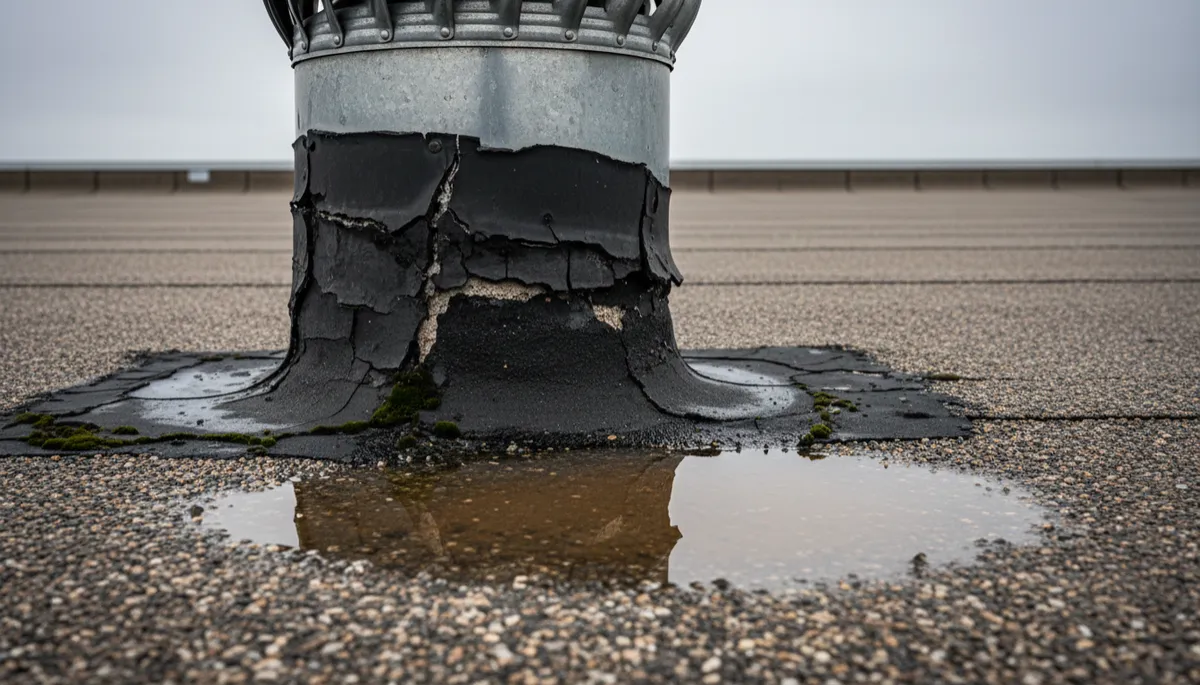
Small defects around flashings and drains often cause the most serious roof leaks.
5. Faulty Installation or Incompatible Materials
Even high-quality products can fail if they are installed incorrectly. Seams that are not properly welded, fasteners that miss structural members, or incompatible sealants can all lead to premature roof leaks. In some cases, new rooftop equipment is added without coordinating with a commercial roofing professional, resulting in penetrations that are not flashed correctly. Choosing experienced contractors, insisting on proper details, and scheduling post-installation roof inspection are essential parts of responsible building maintenance and long-term leak prevention.
6. Expansion, Contraction, and Structural Movement
Commercial buildings constantly move. Steel, concrete, and roofing materials expand in the heat and contract in the cold. Over time, this movement stresses seams, joints, and terminations. If the roof system was not designed with adequate flexibility—such as expansion joints and properly detailed transitions—cracks and gaps can form. Regular roof inspection helps identify stress points before they open wide enough to cause visible water damage inside tenant spaces or critical equipment rooms.
7. Neglected Maintenance and Missed Inspections
The most common cause of roof leaks is often the simplest: lack of maintenance. When a commercial roof is “out of sight, out of mind,” minor issues go unnoticed until they become emergencies. Stained ceiling tiles, mold growth, or damaged inventory are all signs that water damage has been building for some time. A proactive building maintenance plan should include scheduled roof inspections at least twice a year and after major storms, with clear documentation of conditions and repairs.
Turning Insight into Action: Practical Leak Prevention Steps
Knowing the main causes of roof leaks is only valuable if it shapes daily decisions. Start by creating a simple checklist for roof inspection that covers drainage, flashings, seams, and rooftop equipment. Train facilities staff on safe access procedures and what warning signs to photograph and report. Partner with a qualified commercial roofing contractor to perform annual condition assessments, recommend repairs, and plan for eventual replacement. These steps reduce the risk of sudden water damage, protect occupants and assets, and help you get the maximum value from your roofing investment.
📌 Key Takeaway: Roof leaks rarely start as major disasters. With consistent building maintenance, scheduled roof inspection, and prompt attention to small defects, most commercial roofing problems can be controlled long before they disrupt your business.