Weather Effects on Commercial Roof Performance
Commercial Roofing, Roof Performance, Roof Maintenance
How Weather Impacts Commercial Roof Performance
For local businesses, the roof is more than a cover over your operations—it is a critical asset that protects inventory, equipment, employees, and customers. Understanding how weather affects commercial roofing helps you plan proactive roof maintenance, extend system life, and avoid costly disruptions.
Why Weather Matters So Much for Commercial Roofing
Commercial roofing systems are designed to withstand years of exposure, but constant weather cycles gradually weaken even well-installed roofs. Temperature swings, moisture, wind, and sunlight all interact with roofing materials, fasteners, sealants, and drainage components. Over time, this exposure can reduce roof performance, shorten service life, and increase the risk of leaks that disrupt business operations.
For local businesses, the key is not eliminating weather-related stress—that is impossible—but managing it through informed decisions about materials, design, and ongoing roof maintenance. A strategic approach can turn your roof from a recurring expense into a stable, predictable investment.
Heat, Cold, and Daily Temperature Swings
One of the most significant weather factors affecting roof performance is thermal movement. As temperatures rise during the day and fall at night, roofing materials expand and contract. On large commercial roofs, this movement can be substantial, especially on dark surfaces that absorb heat. Over time, repeated expansion and contraction can:
Stress seams and joints, leading to splits or separations in membranes
Loosen flashings around HVAC units, vents, and skylights
Create small cracks that allow moisture to penetrate the roofing system
In colder seasons, freeze–thaw cycles intensify the problem. Water that seeps into minor surface imperfections can freeze, expand, and widen those openings. Without timely roof maintenance, these small issues can evolve into leaks that affect interior spaces, ceilings, and electrical systems.
Rain, Standing Water, and Moisture Intrusion
Flat and low-slope commercial roofing systems rely on carefully designed drainage to move water off the surface. Heavy rain, clogged drains, and uneven settling can create ponding water—areas where water remains on the roof more than 48 hours after a storm. Persistent ponding can:
Accelerate membrane deterioration and promote algae or mold growth
Add unnecessary weight that stresses the roof structure
Increase the likelihood of leaks at seams, penetrations, and weak points
Moisture that infiltrates insulation can compromise thermal performance, raising heating and cooling costs for your facility. It can also remain trapped within the roof system, leading to hidden damage that is difficult to detect without professional inspection. Regular roof maintenance, including cleaning drains and scuppers, is one of the most effective ways to control moisture-related risk.
Wind, Storms, and Debris Impact
Strong winds and severe storms can cause sudden, visible damage to commercial roofing, but they also create gradual wear that may go unnoticed. High winds can lift or loosen edge metal, peel back membrane sections, and drive rain under flashings. Storms may also blow branches, gravel, and other debris across the roof surface, puncturing membranes or damaging protective coatings.
After major weather events, many local businesses understandably focus on ground-level cleanup. However, a prompt roof inspection is equally important. Early detection of wind-related damage helps preserve roof performance and can simplify insurance claims if repairs or replacement are needed.
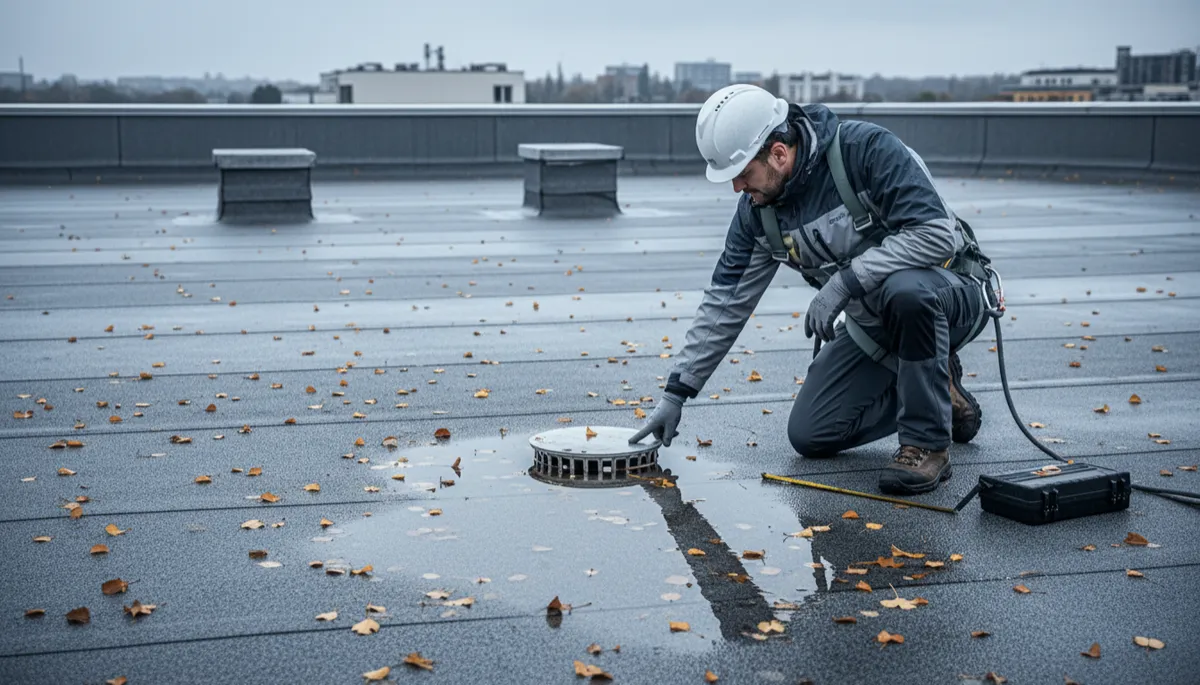
Post-storm inspections catch small issues early, before they disrupt business operations.
Sunlight, UV Exposure, and Long-Term Aging
Even on clear, pleasant days, sunlight is steadily affecting your roof. Ultraviolet (UV) radiation breaks down many roofing materials over time, causing surfaces to become brittle, chalky, or discolored. This natural aging process can reduce flexibility, making the system more vulnerable to cracking and impact damage.
Reflective or “cool roof” membranes and coatings are designed to mitigate some of this impact by reflecting more sunlight away from the building. For local businesses, investing in reflective commercial roofing can improve roof performance, reduce cooling loads, and create a more comfortable indoor environment for employees and customers.
The Role of Proactive Roof Maintenance
Weather exposure is unavoidable, but its impact is manageable when roof maintenance is approached strategically. A structured maintenance program helps local businesses:
Identify minor defects before they lead to leaks or interior damage
Document roof condition for budgeting, planning, and warranty compliance
Extend the service life of existing commercial roofing systems
At a minimum, schedule professional inspections twice a year—typically in spring and fall—along with additional assessments after major storms. Combine these visits with routine housekeeping: clearing debris, verifying that drains are open, and ensuring rooftop equipment is properly secured and flashed. These steps support consistent roof performance and help avoid unexpected downtime for your business.
📌 Key Takeaway: Weather will always test your commercial roofing system. The difference between frequent problems and reliable protection often comes down to proactive, documented roof maintenance tailored to local conditions.
Aligning Your Roof Strategy With Local Climate
Every region has its own weather profile, from heavy rainfall and high humidity to intense sun, snow loads, or frequent wind events. Local businesses benefit from partnering with a commercial roofing professional who understands these conditions and can recommend systems, details, and maintenance plans that match them. By aligning roof design and care with local weather patterns, you protect your building, control operating costs, and maintain a safe, professional environment for everyone who walks through your doors.